Mixing Patterns in Interior Design: Why It Works (and Why It Sometimes Doesn’t)
Mixing patterns is having a moment right now.
Maximalism is back in the conversation. Pattern play is everywhere. Color is finally getting the attention it deserves. And while that’s exciting… it can also feel like a lot.
Because mixing patterns in interior design is one of the quickest ways to make a home feel layered, interesting, and full of personality.
It’s also the fastest way to make a room feel like it got away from you.
Most people don’t avoid pattern because they don’t like it. They avoid it because they’re not sure where the line is between curated and chaotic.
But here’s the part most people don’t realize.
This isn’t new.
Lisa Gilmore Design has been designing with color and pattern since the very beginning - long before it was trending, long before it felt safe. It’s always been part of how we see a space. Not as something to tone down, but something to build with.
Because when it’s done well, pattern doesn’t feel chaotic at all.
It feels layered. Collected. Full of personality.
And while you can absolutely experiment with this on your own, this is also where working with a designer makes all the difference. Our job is to create spaces that feel cohesive and elevated… often in ways our clients didn’t even know were possible.
Or as we like to say, creating something you never knew could exist.
Pattern Isn’t the Problem. Lack of Direction Is.
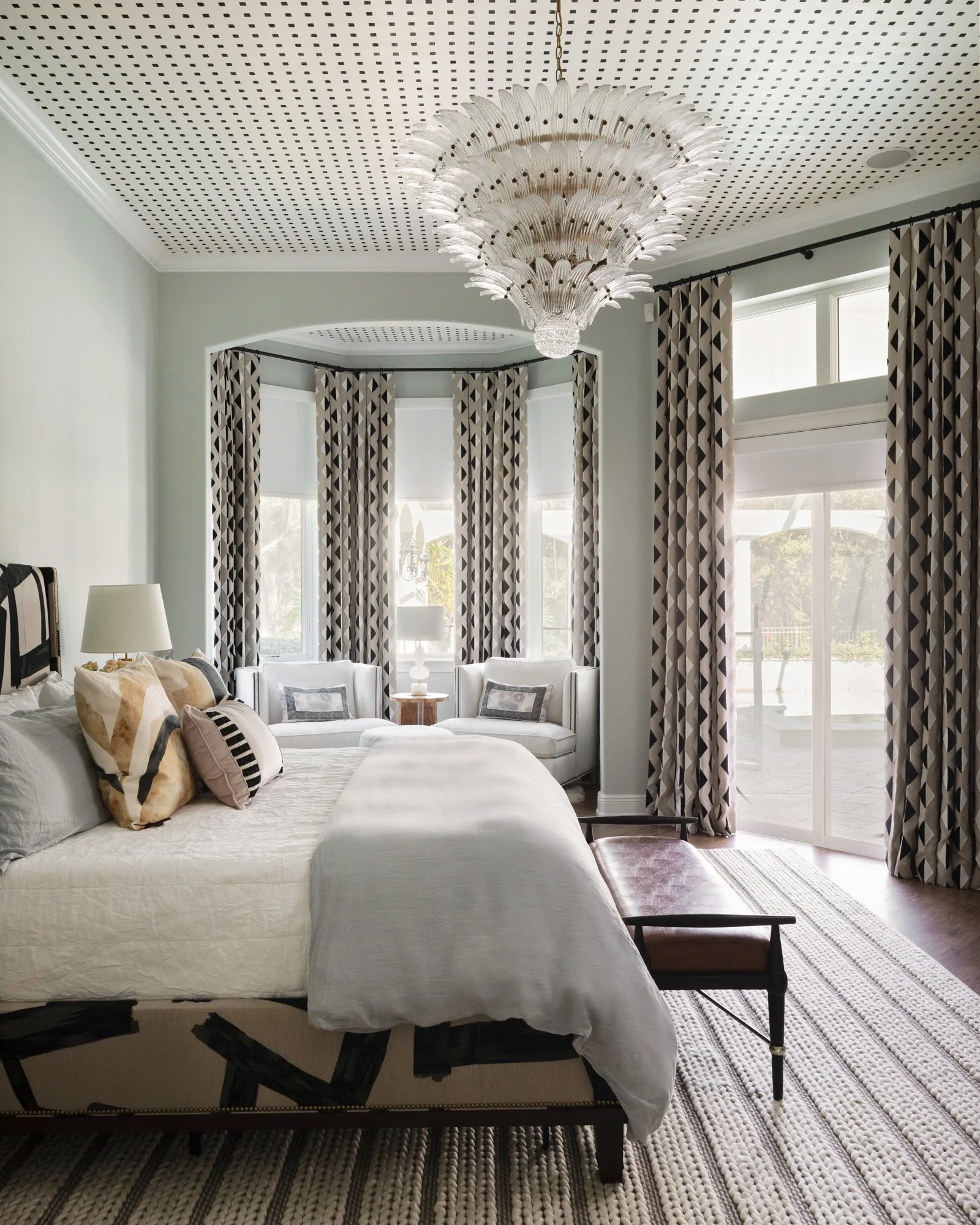
Some of the most beautiful rooms are full of pattern - florals, stripes, geometric shapes, textures - all layered together in a way that feels effortless.
And then you walk into another space with far less pattern… and somehow it feels busy.
The difference isn’t quantity. It’s direction.
When a room feels chaotic, it’s usually because nothing is leading. Every piece is trying to have a moment, but nothing is actually guiding the eye.
The rooms that work always have a starting point.
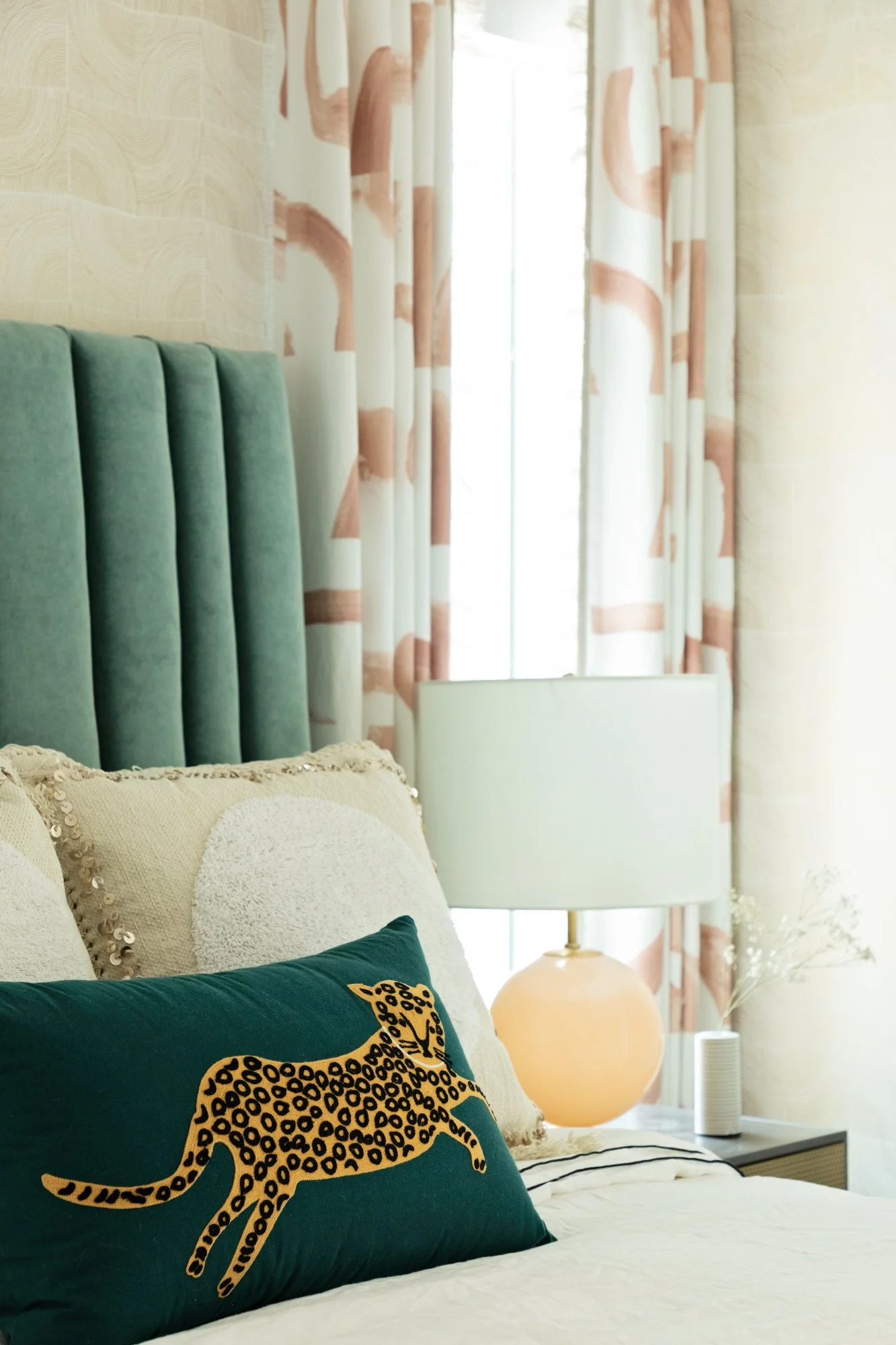
A rug. A fabric. A piece of art. A color story.
Something that quietly sets the tone and allows everything else to fall into place.
Once that anchor is established, pattern stops competing for attention and starts working together.
The Best Recipe for Patterns in Interior Design
There’s a difference between a room that feels decorated and one that feels collected.
A decorated room often looks like everything came from the same retailer. The patterns match, the colors coordinate, and everything feels… finished. In a way that can feel a little flat.
A collected room has more life to it.
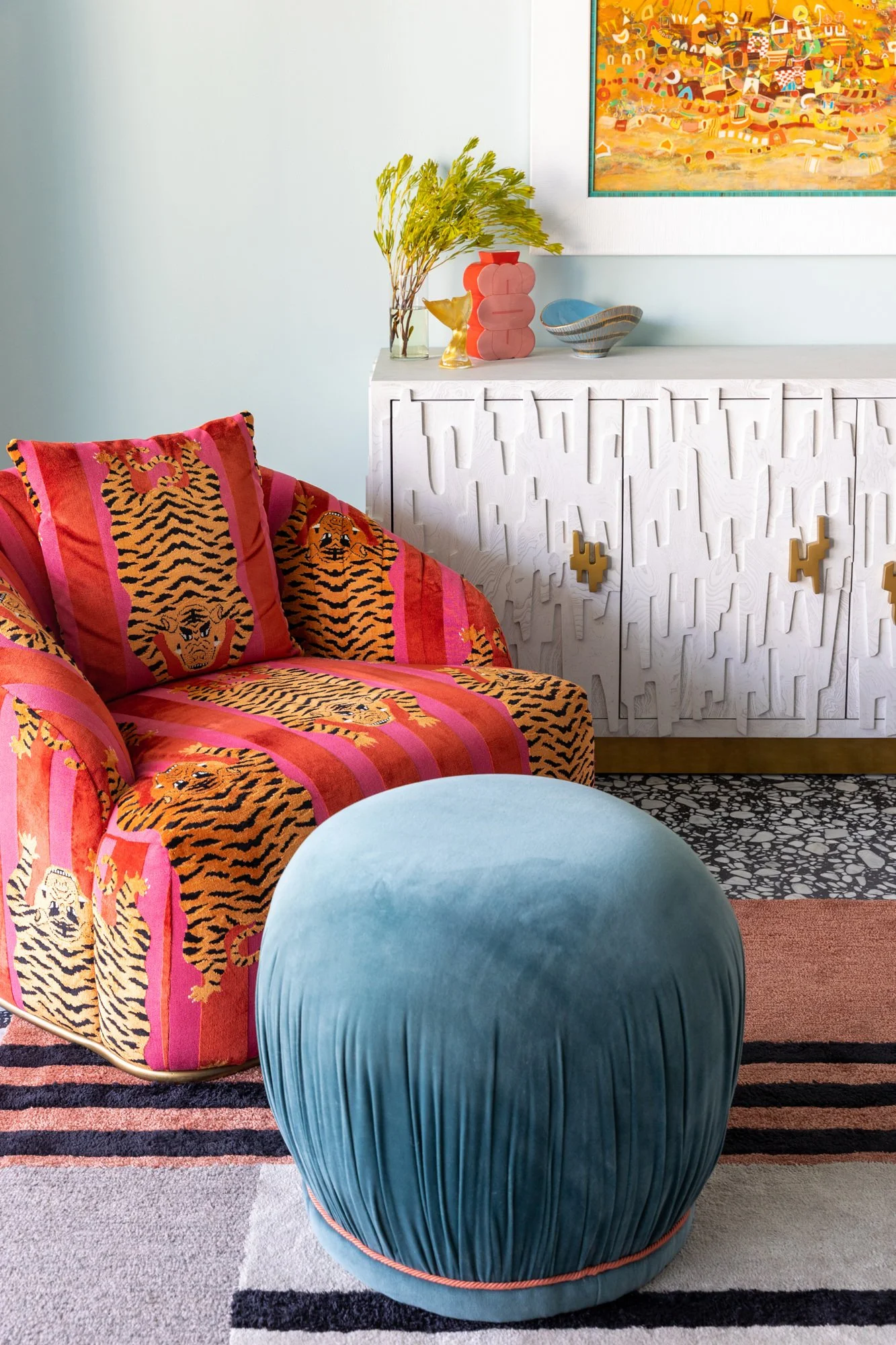
There’s variation. A mix of scale. A little contrast. Pieces that feel chosen rather than assigned.
And this is where pattern really starts to shine.
When everything is trying to match, pattern can feel forced. But when a room is allowed to have personality, pattern becomes the layer that adds depth.
It should feel like the room came together… not like it was instructed to.
Because the goal isn’t perfection.
It’s presence.
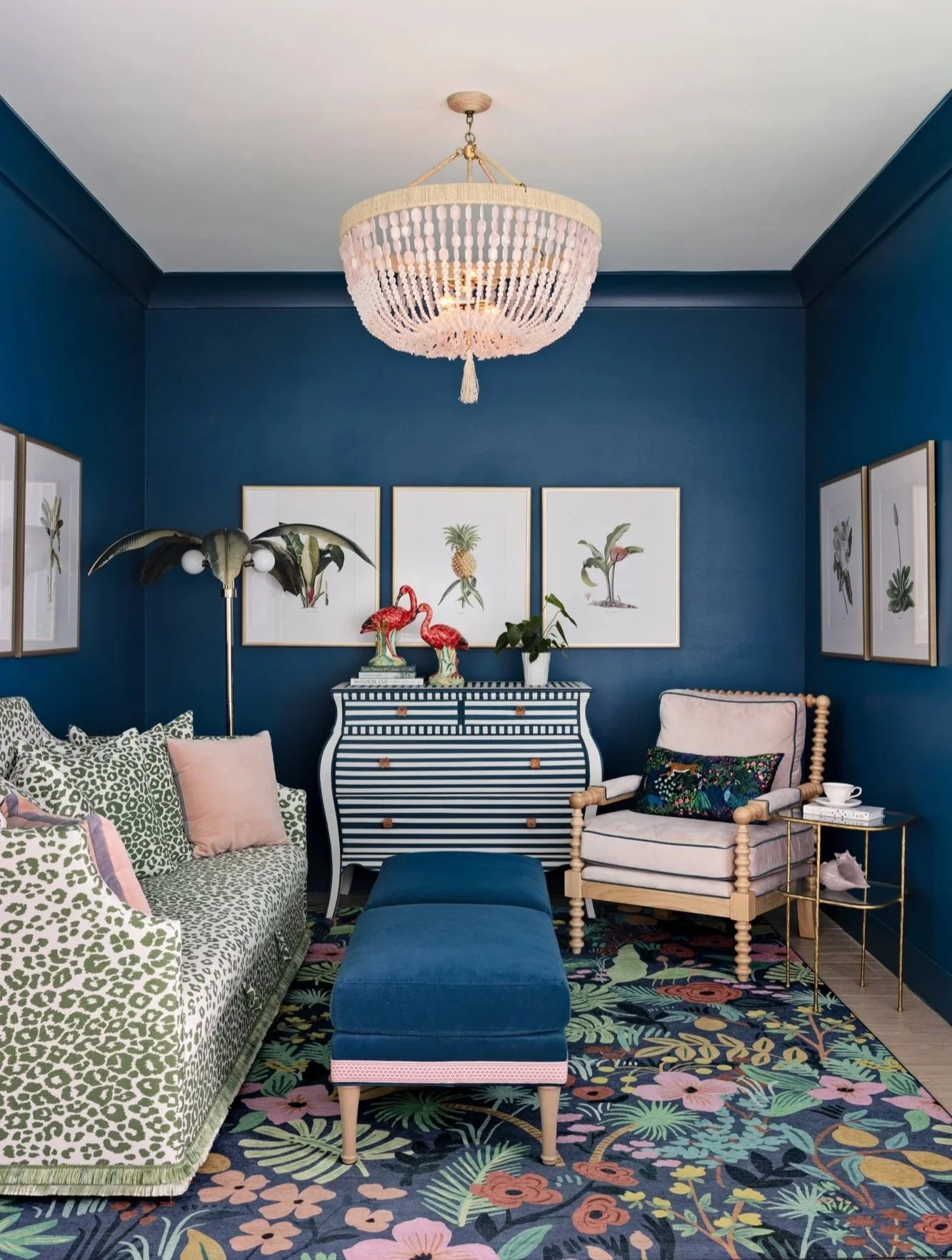
Color Is What Keeps a Bold Room Feeling Calm
When people think about mixing patterns in interior design, they tend to focus on the patterns themselves.
But what actually holds a room together is color.
Color creates a sense of continuity. It gives your eye something familiar to land on as it moves through the space.
When patterns share a common color story, they stop competing and start relating to each other. A floral, a stripe, and a geometric can all live in the same room and still feel cohesive when color is doing its job.
Without that connection, even a few patterns can feel disjointed.
It’s not about limiting how many colors you use. It’s about choosing colors that belong together and allowing them to repeat in a way that creates rhythm.
That’s what makes a room feel layered… instead of overwhelming.
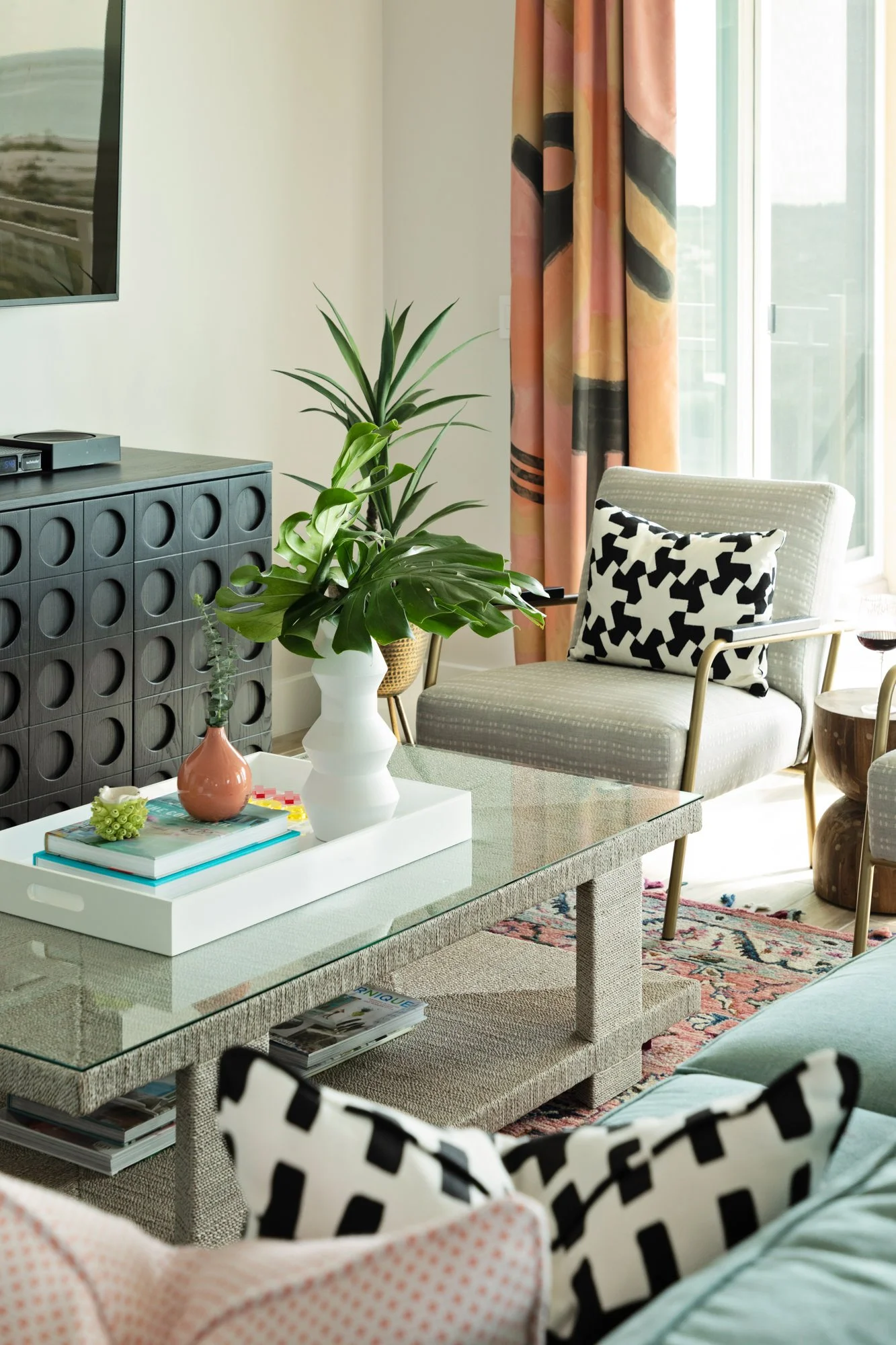
It’s Not About Doing More. It’s About Choosing Better.
There’s a common assumption that mixing patterns means adding more.
More pillows. More prints. More layers.
But the most elevated spaces aren’t the ones with the most going on… they’re the ones where every piece has a role.
A bold pattern that anchors the room.
A secondary pattern that adds contrast.
A quieter element that gives your eye a place to rest.
When everything is trying to stand out, nothing really does.
But when each piece is chosen with intention, the room starts to feel composed - even if it’s full of personality.
That’s the difference.
Not more pattern.
Better pattern.
FAQs: Mixing Patterns in Interior Design
1. How do you mix patterns in interior design?
Mixing patterns in interior design works best when the room has a clear direction. Designers focus on scale, color relationships, and balance so patterns feel intentional rather than overwhelming.
2. How many patterns can you use in one room?
There isn’t a fixed number. A room can handle multiple patterns when they are tied together through a cohesive color palette and thoughtful composition.
3. What patterns go well together in a room?
Patterns with varying scale - such as a large floral, a medium geometric, and a subtle texture - often work well together. The key is contrast with connection, so each element feels distinct but still part of the overall design.
At the end of the day, mixing patterns in interior design isn’t about getting it exactly right.
It’s about creating a space that feels layered, expressive, and a little more reflective of who you are now.
Because the most interesting homes aren’t the ones that played it safe.
They’re the ones that chose personality on purpose. The ones that allowed for color, contrast, and pieces that don’t all match perfectly… but somehow still belong together.
And when it’s done well, it doesn’t feel chaotic at all.
It feels settled. Comfortable. Lived in, in the best way.


If you’re ready to start designing a space that feels unapologetically you, we’d love to help you explore what’s possible. Follow along on Instagram, join our newsletter, or reach out when you’re ready to begin. Because the most beautiful homes aren’t designed for approval - they’re designed for living.